

By Jody B. Cutler, Ph.D.
Assistant Professor of Art History
University of Central Florida
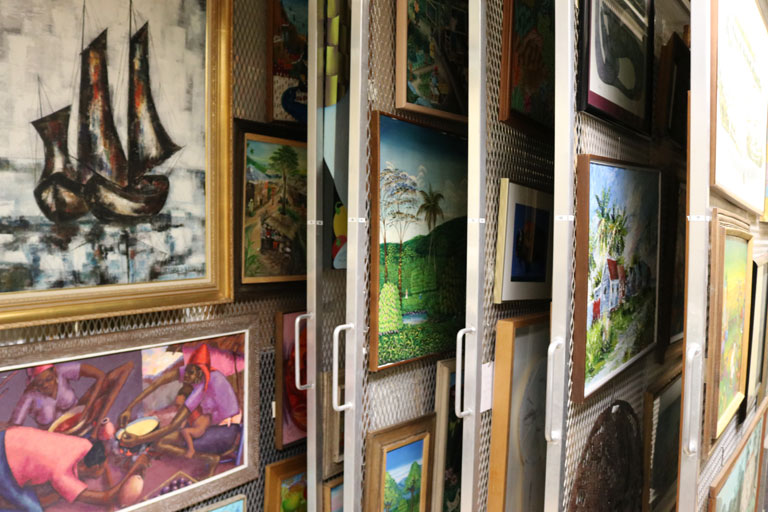
Among the publications and objects in the Bryant West Indies Collection is a group of paintings that have been described as "tourist art." Loaded with connotations, this term has generated an enormous interdisciplinary discourse over the past two decades.1 In research and teaching, these objects can be regarded as primary sources for the exploration of indigenous Haitian painting in the fragile political and economic climate of the postwar period, and religious (Vodun) iconography by students of African and African American, as well as Caribbean art.
While widely diverse objects and images might fall under its rubric, a shared characteristic of the idea of tourist art is a priori foreign patronage of indigenous producers. This patronage emerged at the climactic phase of European colonization around the turn of the twentieth century.
| A William J. Bryant West Indies Collection Virtual Exhibit by the University of Central Florida Libraries | |||
| BRYANT AS COLLECTOR | ABOUT THE COLLECTION | OUR ISLAND HOMES | ABOUT THE EXHIBIT |